
Metabolic Health
Continuous Glucose Monitors: What They Measure and Who Might Benefit
November 10, 2026 Vitality Medicine RX Editorial Team
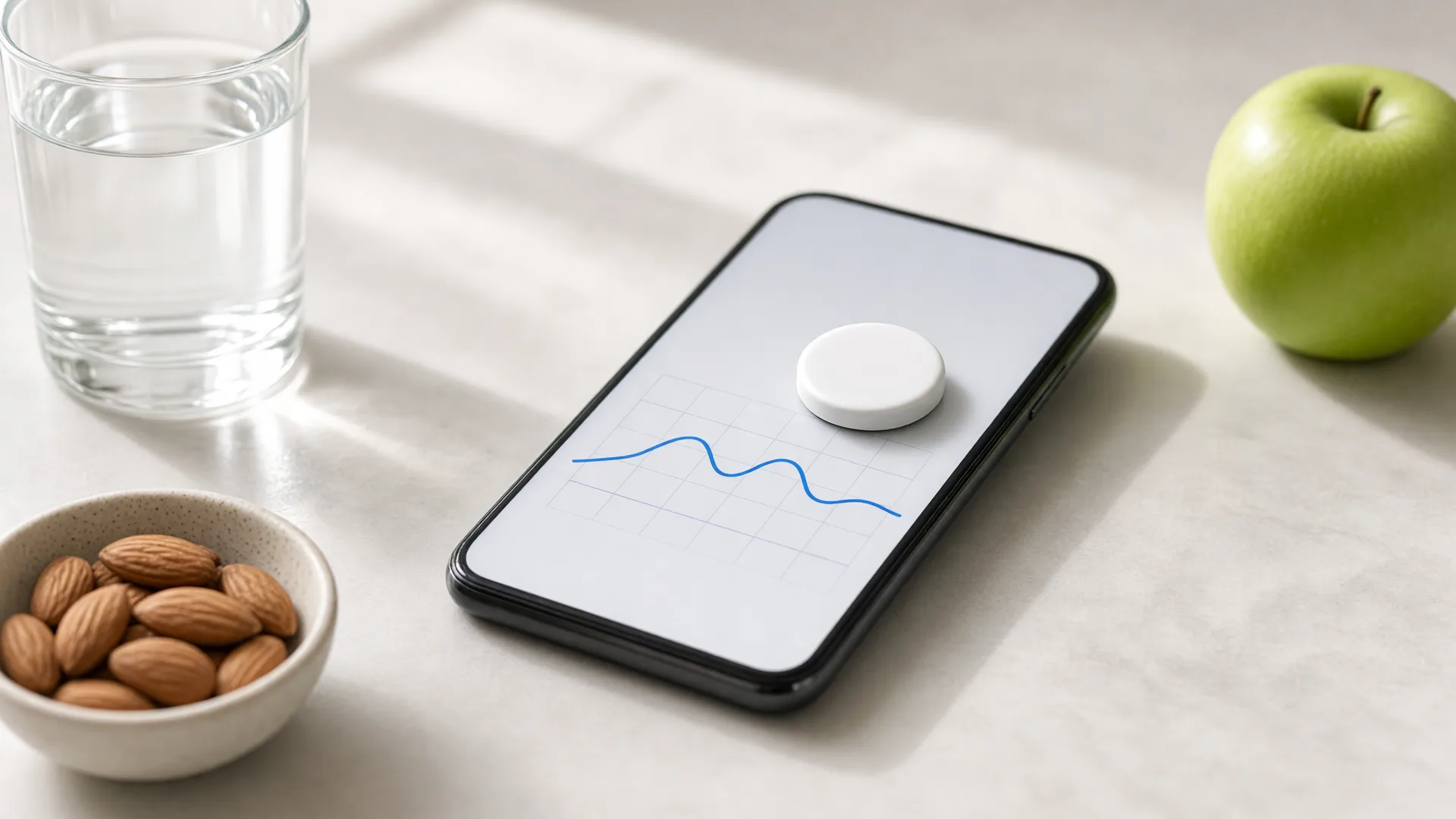
A continuous glucose monitor (CGM) is a small wearable sensor that measures glucose in the fluid just under the skin every few minutes and sends the readings to a smartphone app. CGMs are well validated in diabetes care, where they improve glucose control and reduce low blood-sugar events. In people without diabetes, the evidence is more mixed: some studies show CGMs can improve awareness of glucose patterns and support behavior change in people with prediabetes, but there are no consensus standards for interpretation and no proven long-term health benefit or prevention of diabetes. Vitality Medicine RX offers advanced practice provider-led telehealth metabolic and functional medicine care in states where Dr. Miklos Major II, Sc.D., DNP, NP-BC, FAAMFM holds an active license.
What is a continuous glucose monitor?
A CGM is a small sensor worn on the body, usually on the upper arm or abdomen, that measures glucose in the interstitial fluid, the fluid between cells, every few minutes. The readings transmit wirelessly to a phone app or receiver, so a person can see current glucose, trend arrows and alerts without routine fingerstick testing.
How is CGM used in diabetes care?
For people with type 1 or type 2 diabetes, especially those using insulin, CGM is a validated tool. Evidence shows it can lower A1c, increase time in range and reduce dangerously low glucose events. This is the use for which interpretation standards and treatment guidance are well established.
Can a CGM help someone without diabetes?
The evidence is promising but limited. A 2026 systematic review with meta-analysis found CGM use improved average glucose and glycemic control in people with prediabetes and was associated with better dietary adherence and behavior change. At the same time, a review in JAMA Internal Medicine found no good evidence that CGM prevents diabetes or improves long-term health in people without diabetes, and some experts caution about unnecessary cost and anxiety.
Who might consider a CGM for metabolic health?
- People with prediabetes who want to see how specific foods and meals affect their glucose
- People with insulin resistance or metabolic syndrome who are working on lifestyle changes
- People with a family history of type 2 diabetes who want more objective feedback on glucose patterns
- People whose clinician recommends CGM as part of a broader metabolic evaluation
What are the limitations and cautions?
- There are no consensus standards for what a normal or abnormal reading means in people without diabetes
- No major trial shows CGM prevents diabetes or produces long-term health improvement in non-diabetics
- Readings can occasionally prompt unnecessary worry or overly aggressive diet changes
- A CGM is a measurement tool, not a treatment; it does not lower glucose by itself
When to talk to a clinician
If you are considering a CGM for metabolic health, bring it up with a clinician who can help you interpret results in context and decide whether it adds useful information for your situation. A CGM works best as part of a broader plan that includes nutrition, activity and, where appropriate, medical treatment. Book a discovery call with Vitality Medicine RX and we will confirm we can see you in your state and review your history and options.
Sources
- Continuous Glucose Monitoring for Persons With and Without Diabetes, JAMA Internal Medicine
- Is Glucose Monitoring Useful for Non-Diabetics?, Johns Hopkins Bloomberg School of Public Health
- Continuous glucose monitoring in non-diabetic populations: a systematic review of observational and interventional studies with meta-analysis, European Journal of Medical Research
- Use of Continuous Glucose Monitors by People Without Diabetes: An Idea Whose Time Has Come?, Journal of Diabetes Science and Technology
Related Pages
Talk to a Clinician
This article is educational and does not replace individualized medical advice. If you have questions about your own health, book a discovery call with Vitality Medicine RX. Your care is led by Dr. Miklos Major II, Sc.D., DNP, NP-BC, FAAMFM, a Doctor of Nursing Practice (DNP) and Doctor of Science (Sc.D.), board-certified advanced practice provider (NP-BC). Care is available in states where he holds an active license.
Book a Discovery CallQuestions About This Topic
What does a CGM measure?
A CGM measures glucose in the interstitial fluid, the fluid between cells, every few minutes and sends readings to a smartphone app. It reflects blood glucose with a short lag time.
Is a CGM useful for people without diabetes?
Evidence is mixed. Some studies show improved glucose awareness and behavior change in people with prediabetes, but there is no proven long-term health benefit or prevention of diabetes, and interpretation standards for non-diabetics do not yet exist.
Does wearing a CGM lower blood sugar?
No. A CGM only measures glucose. Any improvement comes from how the information is used, such as adjusting meals, activity or treatment under clinician guidance.
Who should not rely on a CGM?
Anyone using CGM results to make treatment decisions, especially with insulin or medications that can cause low blood sugar, should do so with clinician guidance. A CGM is not a substitute for medical advice.
Can a CGM help me prevent type 2 diabetes?
There is no strong evidence that CGM alone prevents type 2 diabetes. Lifestyle changes and, when appropriate, medical treatment are the mainstay of prevention; a CGM may add useful feedback along the way.
Last updated 2026-11-10.