
Men's Health
Testosterone Therapy and Blood Pressure: What Men Should Know
November 17, 2026 Vitality Medicine RX Editorial Team
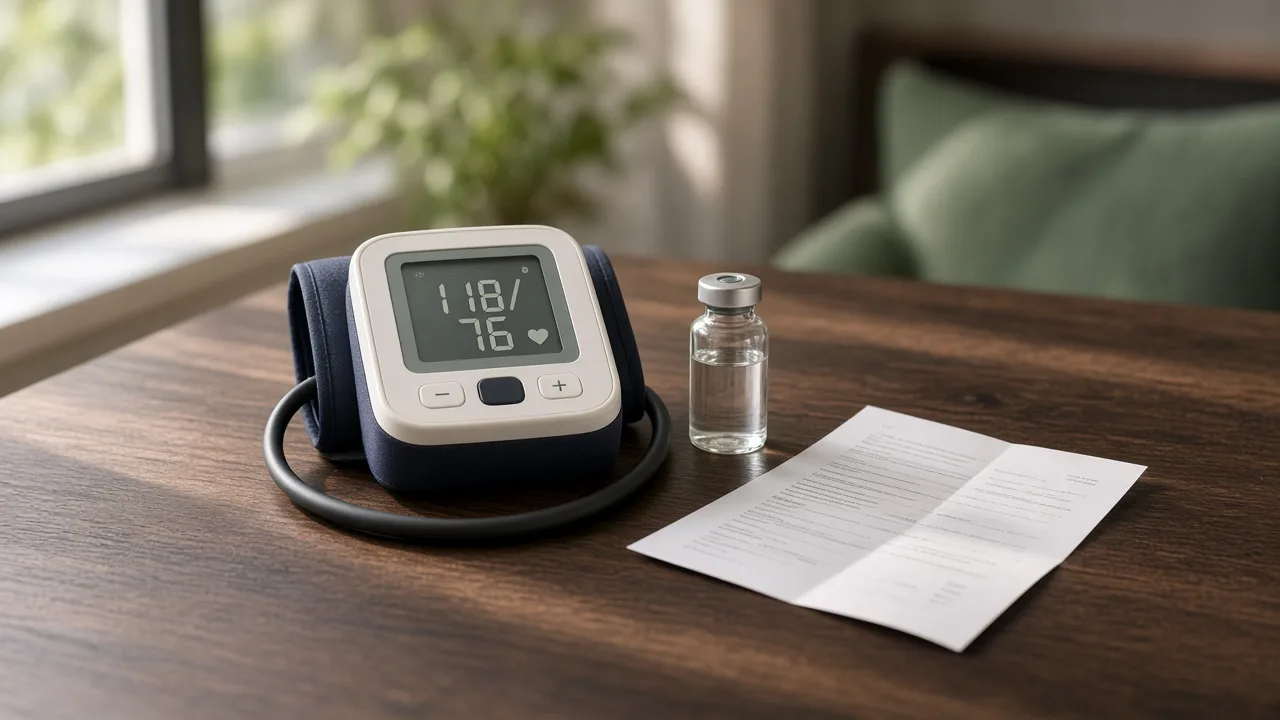
Testosterone therapy can raise blood pressure by a small amount in some men, which is why U.S. product labels now carry a warning about blood pressure. At the same time, the landmark TRAVERSE trial found testosterone did not increase the rate of major cardiovascular events in men with heart disease or elevated risk. Monitoring blood pressure, blood counts and other labs is a routine part of responsible care. Vitality Medicine RX offers advanced practice provider-led telehealth hormone care in states where Dr. Miklos Major II, Sc.D., DNP, NP-BC, FAAMFM holds an active license.
Does testosterone therapy raise blood pressure?
Yes, modestly for some men. In randomized ambulatory blood-pressure monitoring data used by the U.S. Food and Drug Administration to update testosterone product labels, 24-hour systolic blood pressure rose by an average of about 2.7 mm Hg and diastolic by about 1.1 mm Hg in one four-month study of testosterone gel. The effect is small and varies by individual, but it is one reason blood pressure is checked during treatment.
Does testosterone therapy increase the risk of heart attack or stroke?
The TRAVERSE trial, published in the New England Journal of Medicine in 2023, randomized more than 5,000 men aged 45 to 80 with low testosterone and existing heart disease or elevated cardiovascular risk to testosterone gel or placebo for about 22 months. Testosterone was noninferior to placebo for major adverse cardiovascular events, meaning no increased risk was found in that trial. Based on these results, the FDA removed the earlier boxed warning about cardiovascular risk while adding the blood-pressure warning.
What about red blood cells?
A rise in hemoglobin and hematocrit is the most common laboratory effect of testosterone therapy, and it is dose-dependent. For some men this requires a dose adjustment or, less often, stopping therapy, because a marked increase in red-cell mass may raise thromboembolic risk. Injectable testosterone generally raises hematocrit more than gels or transdermal forms, which is one of several reasons treatment is individualized and monitored.
- Blood pressure is checked at baseline and during follow-up, especially in men with hypertension
- Hematocrit and hemoglobin are monitored because erythrocytosis is the most common lab effect
- Lipids, PSA and estradiol are reviewed along with symptoms and history
- Dosing and route of administration are adjusted based on individual response
When to talk to a clinician
If you have low testosterone symptoms and also manage high blood pressure, heart disease or other cardiovascular risk factors, evaluation should come before any decision about therapy. Start with a discovery call so we can confirm we can see you in your state and outline the labs and monitoring that would apply to your situation.
Sources
- Cardiovascular Safety of Testosterone-Replacement Therapy (TRAVERSE), New England Journal of Medicine (2023)
- U.S. FDA prescribing label for testosterone products, blood-pressure warning and TRAVERSE outcomes
- The Medical Letter: Label Changes for Testosterone Products
- Testosterone Replacement Therapy and Cardiovascular Outcomes in Men: Updated Meta-Analysis of RCTs, JACC (2025)
- Testosterone replacement therapy and vascular thromboembolic events: systematic review and meta-analysis (European Academy of Andrology)
Related Pages
Talk to a Clinician
This article is educational and does not replace individualized medical advice. If you have questions about your own health, book a discovery call with Vitality Medicine RX. Your care is led by Dr. Miklos Major II, Sc.D., DNP, NP-BC, FAAMFM, a Doctor of Nursing Practice (DNP) and Doctor of Science (Sc.D.), board-certified advanced practice provider (NP-BC). Care is available in states where he holds an active license.
Book a Discovery CallQuestions About This Topic
Does testosterone therapy raise blood pressure?
In some men it causes a small increase, in the range of a few millimeters of mercury. It is not the same for everyone, and blood pressure is monitored during treatment.
Does testosterone therapy increase the risk of heart attack or stroke?
The TRAVERSE trial found no increase in major cardiovascular events in men with heart disease or elevated risk. The FDA removed the boxed warning about cardiovascular risk while adding a blood-pressure warning.
What is the most common lab side effect of testosterone therapy?
A rise in hemoglobin and hematocrit (erythrocytosis) is the most common effect and may require a dose adjustment or stopping therapy in some men.
Is blood pressure checked during testosterone therapy?
Yes. Baseline and follow-up blood pressure checks are a standard part of care, especially in men who have hypertension or other cardiovascular risk factors.
Last updated 2026-11-17.